

JIHAN
BIO
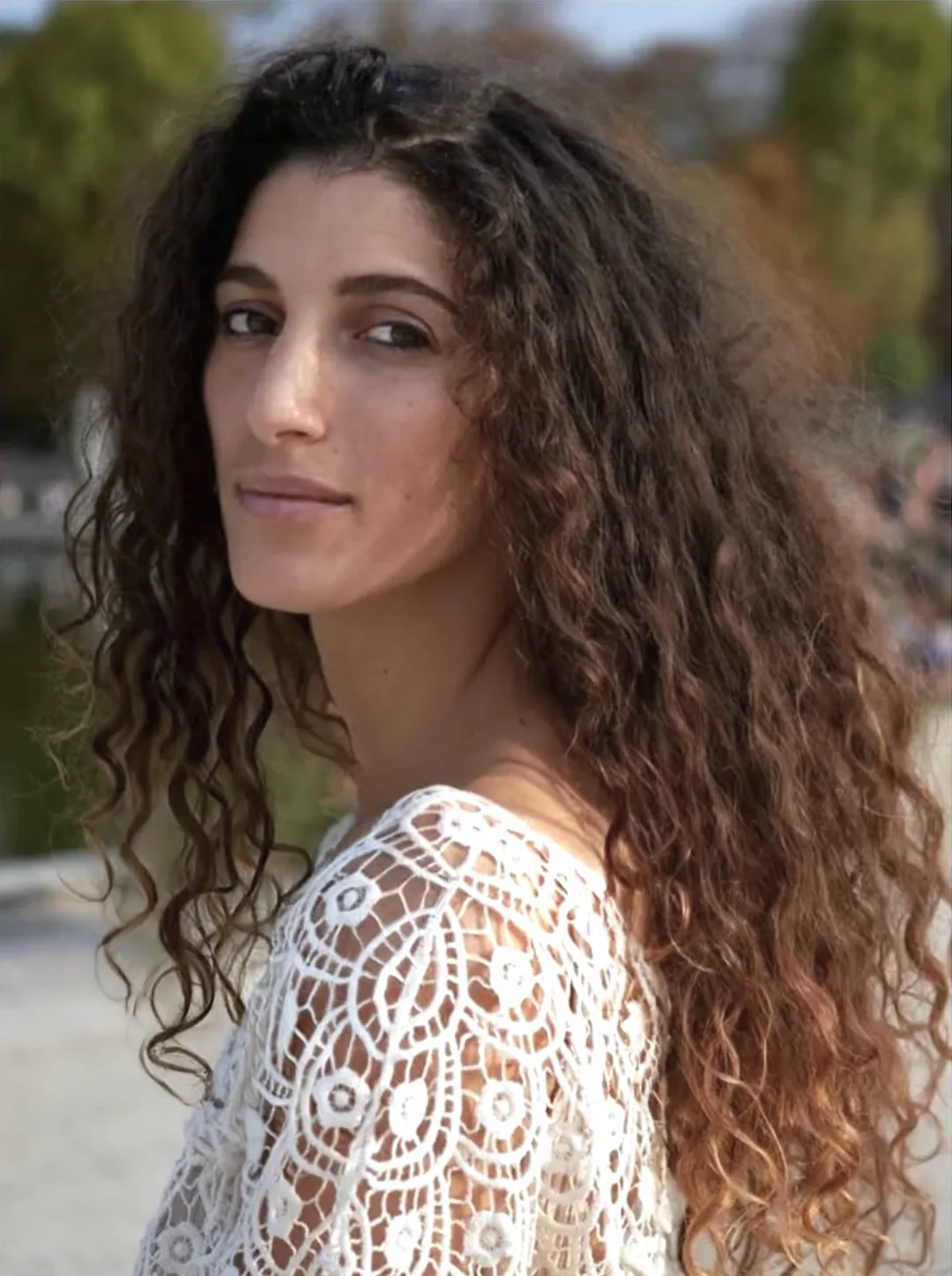
Jihan was born in exile and raised in Paris while her father, a Libyan human rights lawyer, was the peaceful opposition leader to Qaddafi’s regime.
After her father disappeared from Cairo, her family lived between the United States and France, while her mother, a Syrian artist, fought for justice in an international campaign.
Jihan received her BA in International and Comparative Politics with a concentration in Human Rights, Philosophy, and International Law and her MA in Art Education and Storytelling. My Father and Qadaffi (Spanish premiere in AFRIKALDIA 2026) is her first feature film, and it had its world premiere in the official section of the Mostra di Venezia 2025.
FILMOGRAPHY
My Father and Qadaffi (2025). Documentary film. (88’).
STATEMENT
I don’t want my father to disappear a second time. I feel an urgency to overcome my void in the midst of Libya’s relentless chaos and instability, which I fear will eventually bury my connection to Libya. In my documentary film, My Father and Qaddafi, I search through other people’s memories trying to create a clearer picture of my father who I don’t remember.
Making this documentary helps me understand the importance of a father figure and the impact of losing a father on a family, a community, and even a country. Sharing my father’s untold story is also sharing an untold story of Libya, one that spans almost one century of Libyan history and politics. As I reflect with my father’s colleagues over their lost Libya, I wish I could ask my father, how did we end up like this? And how is Libya going to break free from this cycle of trouble?
As I reconstruct my father’s portrait, I plant the seed for a deeper, more honest connection with him and to free my hidden voice. Instead of compartmentalizing my father as a one-dimensional hero from the past, I search for the man behind the myth and try to reintegrate him into my present life as a human being and a loving father.
Since I was 6 years old, my mother told us the truth, and although this has tempered the shock, I still struggle with a constant surreal feeling. Despite my fragmented memories, my fears, and my cultural limitations in Libyan society, I am trying to overcome this surreal feeling and reconnect with my father and with Libya on my own terms, as an open-hearted woman. This is one of the ways I am hoping to hold my father before he disappears completely from my memory and even potentially from Libya’s memory.