

IBRAHIM MURSAL
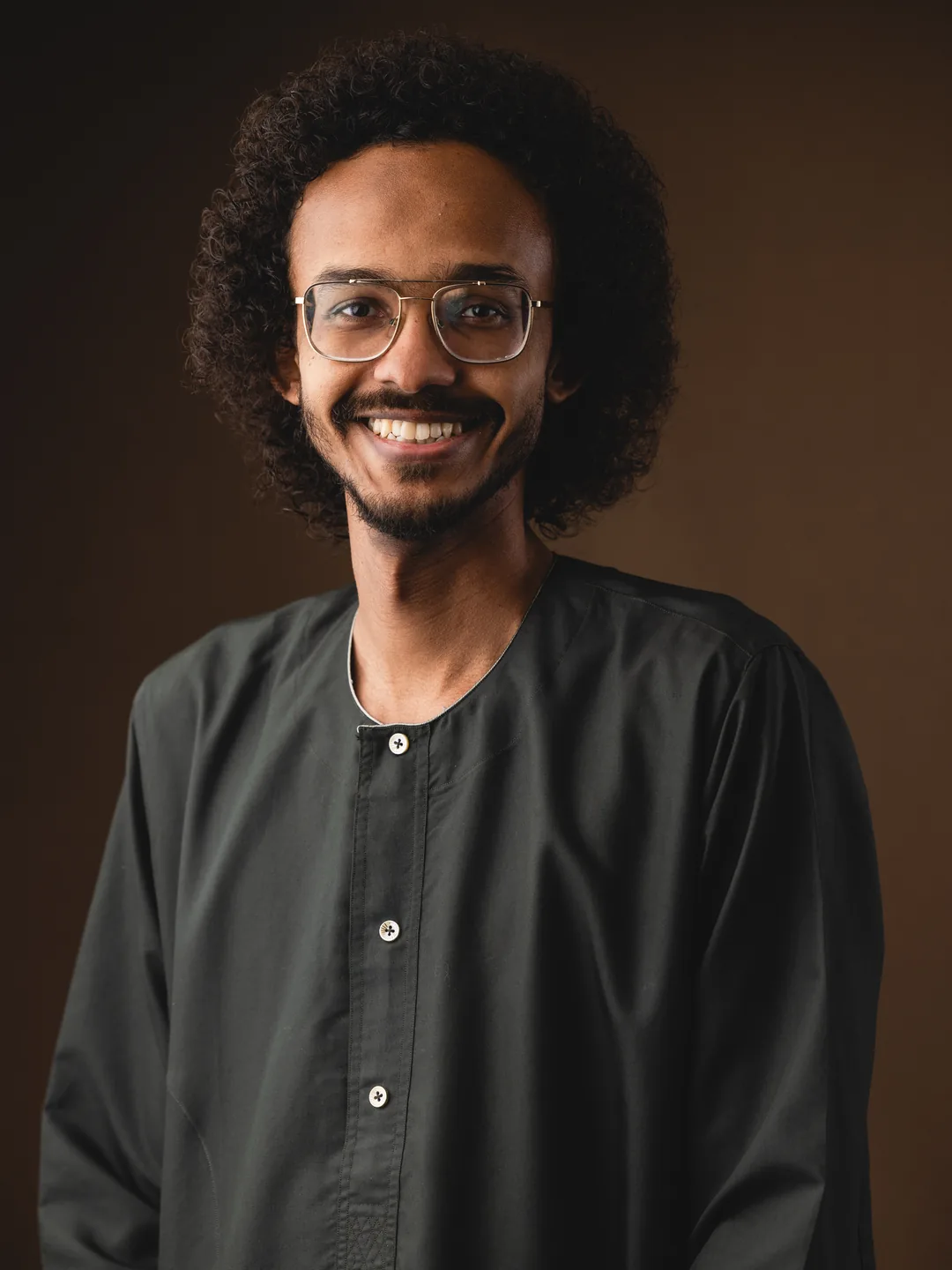
BIO
Ibrahim Mursal is a Norwegian-Somali-Sudanese filmmaker and writer who explores the concept of identity in his work and aims to create films that challenge established views and provoke dialogue. After graduating as an oil engineer, he followed his passion in film. His breakthrough came with The Art of Sin (2020), to international acclaim, followed by Connections (2022) which delves into multicultural youth perspectives, and Set Pieces (2024), which premiered at Bergen IFF.
His first fiction short film, the critically acclaimed African Family Dinner (2024, AFRIKALDIA 2026), is currently touring international film festivals while he develops his first feature film, which examines justice and morality through the lens of cultural upbringing.
Mursal lectures at universities and schools, using film as a tool to talk about taboos, gender roles, expectations, culture and religion, mental health, and sexual orientation in a nuanced and inviting way. He is also film advisor at the non-profit and politically independent organization Sex og Politikk (IPPF Norway). The organization works to strengthen and promote sexual and reproductive health and rights in Norway and internationally.
FILMOGRAPHY
African Family Dinner (2024). Short fiction film. (13´).
Set Pieces (2024). Documentary short. (12´).
Connections (2022). Documentary short. (13´).
The Art of Sin (2020). Medium-length documentary (58´).
The Art of being a Sinner (2017). Documentary short (20´).
50 Piasters (2012). Student fiction short (6’).
STATEMENT
“If we can laugh together, we can talk together.” This idea drove me to create a short comedy about a topic as polarizing and sensitive as cultural appropriation and racial microaggressions. As a Black, Muslim Arab man living in Norway, I’ve faced my share of racial abuse and dehumanizing media attention. But what strikes me is how little focus there is on the more common experience of “everyday racism”-the subtle comments and actions that leave you feeling insulted yet unsure how to respond. These moments often occur in spaces you consider safe, like with a friend or colleague, where an offhand comment puts you in a painfully awkward position. Do you speak up and risk creating tension, or stay silent and swallow the discomfort?
This film seeks to capture that awkwardness-the mix of hurt and hesitation-while also exploring the well-meaning intentions behind such interactions, which make them so tricky to confront. Framing it as a comedy allows me to start a conversation I’ve long wanted to have, but in a setting that encourages reflection without the guilt and defensiveness that often accompany these discussions.
I hope the film prompts us to look inward and reflect, because at some point, we’ve all been on both sides of this table. Sometimes we’re the ones experiencing well-intentioned but harmful comments; other times, we’re the ones causing harm without realizing it. If we can laugh and cringe together, I truly believe we can talk-and reflect-together on how to do better.