

VINCHO NCHOGU
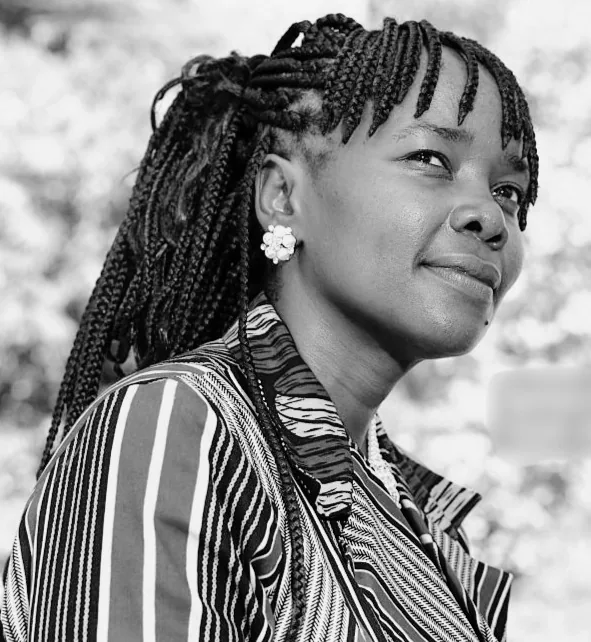
BIO
Vincho Nchogu is a multi-medium storyteller and an Indigenous Knowledge Systems digital archivist. She gained recognition in 2017 as the producer of “Gabriel and the Mountain,” a Brazilian biopic that premiered at the la Semaine de la Critique du Festival de Cannes, winning two awards. Prior to this, Ms. Nchogu produced the East and central African segment of the ‘Future Express series’ (NCVR), directed by Rob Hoff. She has produced a number of International documentaries including the short Doc directed by Uzo Aduba (Orange is the new black) for the Love Vote, USA. She is also the Director of ‘African Knowledge Systems’, a short doc series currently streaming on Youtube. In 2021, her investigative podcast ‘Case Number Zero’, became Kenya’s number one crime podcast. Currently, Ms. Nchogu is directing and producing ‘KEDONG’(In advanced development), a poaching thriller set in Kenya, Nigeria and USA. Ms. Nchogu is a Film Independent Producing fellow.
In 2025, she wrote and directed One Woman One Bra which premiered at the 82nd Venice International Film Festival, and won the Sutherland award for best first feature film at the BFI London Film Festival.
FILMOGRAPHY
One Woman One Bra (2025). Feature film (85’).
The Resurrection (2009). Short fiction film (10’).
STATEMENT
My journey in filmmaking began with creating propaganda films for a nonprofit organization, where I often witnessed individuals suppress their personal narratives to conform to the organization’s ‘salvation myth.’ A turning point for me was the viral documentary “KONY 2012,” which raised $30 million and prompted me to question its true impact on the children involved. My first feature, One Woman One Bra, explores the tensions of personal ambition, cultural reclamation, and ethical dilemmas. I am grateful for the support of the Venice Biennale College, which allowed me to tell the story of a woman fighting for recognition despite lacking family, husband, or children. It raises the question of a woman’s identity when she is not a mother, daughter, or wife. What began as a political commentary evolved into a feminist narrative. I met Amos Leuka through my casting director. He not only welcomed me to film in his village of Nkosesia, Loita, but also gathered women from a traveling community theater to audition. We found our location, core cast, and community in one weekend after months of searching. My producer, production designer, cinematographer, and I shuttled between Nairobi and Loita for several weeks in preparation for production. Ultimately, we assembled a diverse cast and crew, with 70% hailing from Nkosesia, for which I am immensely thankful. I am excited for audiences to experience this film, crafted by an incredibly talented cast and crew. Viewers will embark on a journey with a woman battling for her home and identity while immersed in the vibrant sights and sounds of a village nestled on the Kenyan border with Tanzania.