

AKINOLA DAVIES JR.
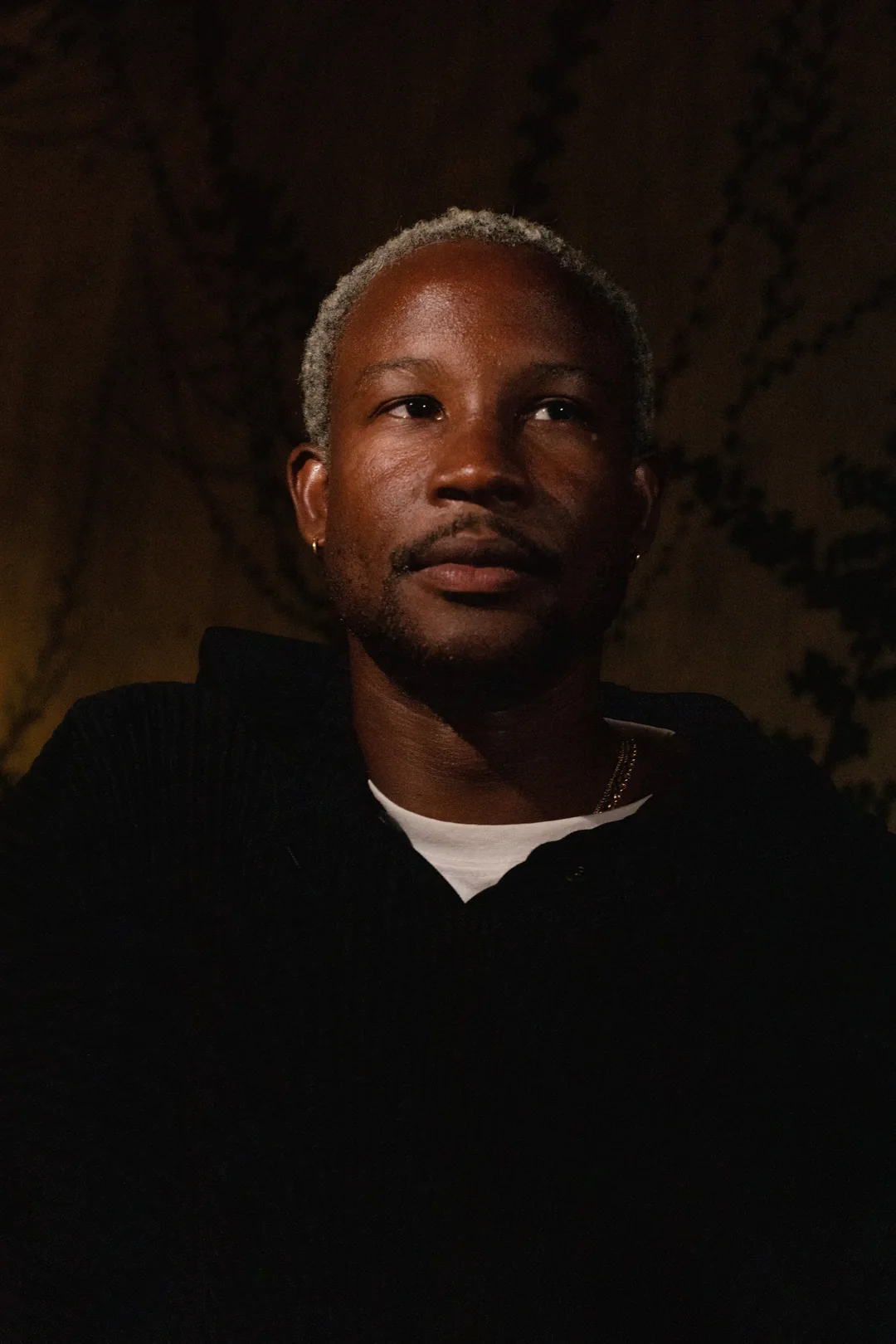
BIO
Akinola Davies is a British-Nigerian multi-disciplinary filmmaker, writer, and video artist. His work spans nations to explore themes of community, race, spirituality, identity and gender, telling stories that bridge the gap between generations and communities.
His narrative short film Lizard premiered at the 2020 Sundance Film Festival, followed by the London Film Festival. Lizard was nominated for the BAFTA for Best British Short Film in 2021, having also won the Sundance Grand Jury Prize and the Blackstar Film Festival Short Film Award. Akinola was selected for the Berlinale Talents 2020 Collective and was named one of Screen Daily’s ‘Stars of Tomorrow’.
Akinola has become a go-to creative in the fashion industry, working with brands such as Gucci, Acne Studios, COS, Moncler, Kenzo, Mulberry, Louis Vuitton on multiple creative projects, in front of, and behind, the camera. Alongside his work in narrative film and fashion, Akinola has directed music videos for artists including Neneh Cherry, Kae Tempest and Blood Orange.
FILMOGRAPHY
My Father’s Shadow (2025). Feature film (94’).
Foresight (2021). TV Mini Series. (1 episode).
Gucci: Gift 2020 (2020). Spot (1’17’’).
Lizard (2020). Short fiction film. (18’).
Hillu (2020). Short fiction film. (12’). Co-directed.
Black to Life (2019). TV Series (1 episode).
One Day Go Be One Day (2019). Short fiction film.
Contactless (2018). Short fiction film.
Amodou et Mariam – Bofou Safou (2018). Official Lyric video.
Marks of Worship (2016). Short fiction film.
STATEMENT
Writing the script of My Father’s Shadow with my brother Wale become some of my favorite days. Even though we’re both involved in that world, the idea of making a film seemed somewhat far-fetched. What I would do is force us to go on ‘mini holidays’ with each other, so we could concentrate fully on writing. (…) Neither of us are technically trained as writers, but we’d just throw out ideas and debate each one. We’d look at pictures, or watch films and listen to songs, and then that would inspire us.
We knew that we would be including our own grief. Within the film, there is a lot about nurture – paternal nurture, specifically. A big thing about what my brother and I have experienced is the absence of a father figure. But we decided to make a film that revolves around a father, (…) even though our mother has been probably the single most important person in our lives.
Folarin probably represents the archetypal Nigerian man and father – someone who is charismatic and charming but who is also hardworking and has a sense of obligation to his family. Folarin presents this very strong exterior, but he is probably very soft inside and very emotional. (…) Folarin is trying to perform masculinity in a certain way but keeps meeting with obstacles.
I left Nigeria when I was 12 or 13, and because I left at that age, I really romanticize it. That’s always stayed with me – I want to cater to my younger self. Cinematically, children give you permission to dream, to make, I wouldn’t say magical realism, I’d say supernatural drama. A child’s perspective allows you to go into dreamlike vignettes, since kids are so curious about everything.